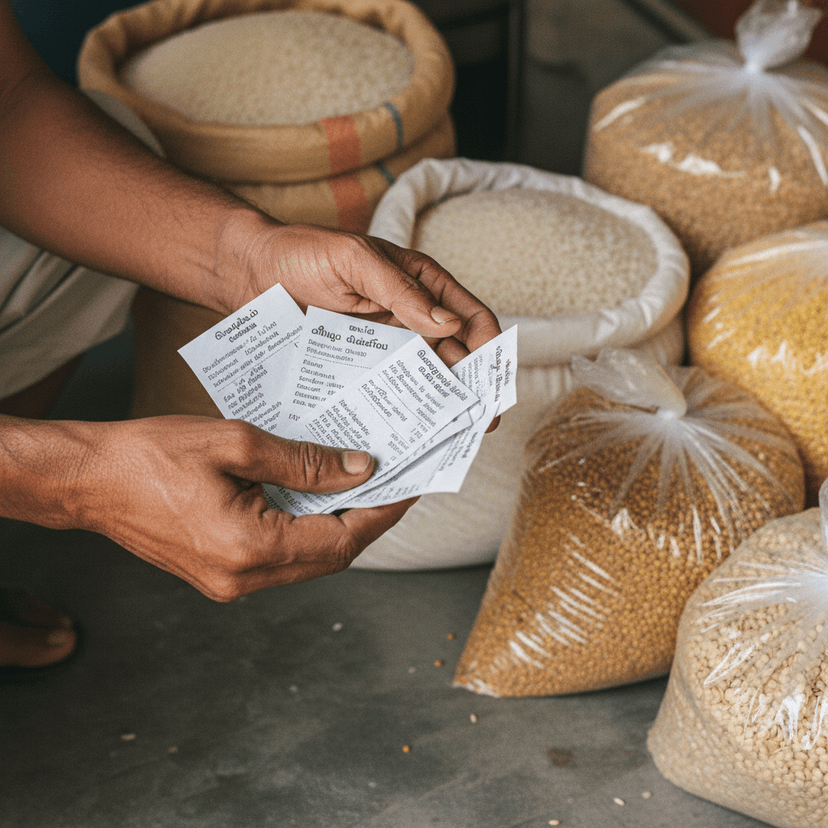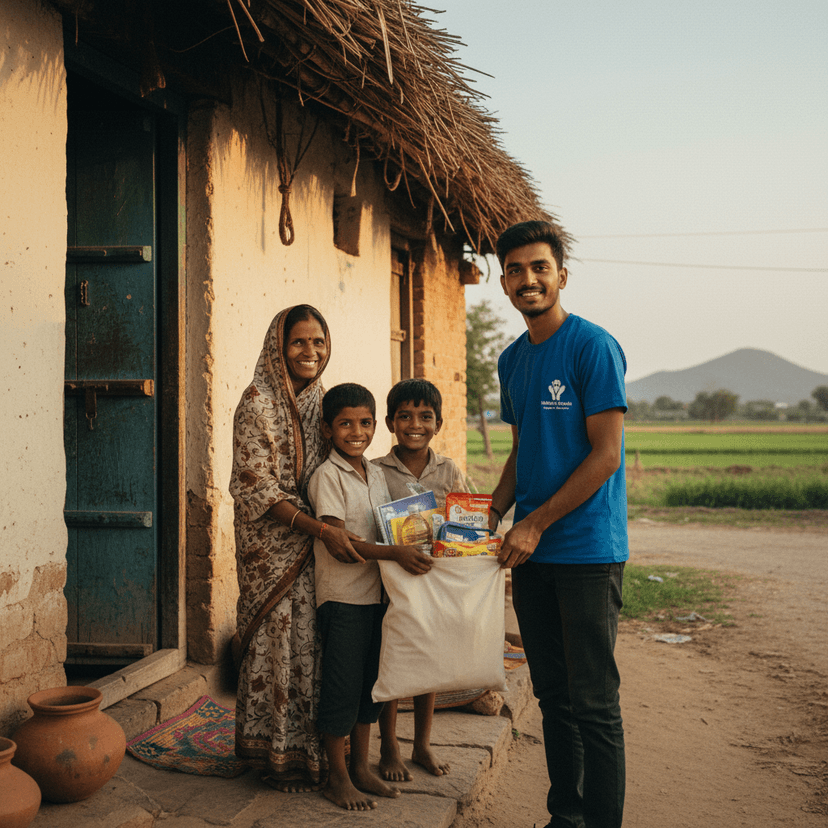
A lot of rural Tamil Nadu still runs on daily-wage farm work: planting, weeding, harvesting, and herding, paid by the day. It is the work families fall back on when there is no other income, and it rarely leaves anything over for college.
Ragul and Giriprasath both grew up in those families. Both loved agriculture. Here is how they got to college.
Ragul Praveen: his mother's ₹200 a day
Ragul's father died when he was a child. His mother, Govindammal, supported him and his elder sister by working as a daily-wage agricultural laborer. By the time Ragul started college, she was 62 years old and earning ₹200 a day.
Ragul scored 459/500 in 10th grade and 452/600 in 12th and won a place in a B.E. Agriculture program at a top college in Coimbatore. The bill was ₹60,000 a year in fees plus ₹55,000 for hostel and mess, nearly two years of his mother's wages. She took out a loan to get him through the first year. By the second year, they could not keep up.
Ragul was holding a GPA above 8/10, and our donors stepped in with scholarship support. He completed his degree in Agricultural Engineering, the first graduate in his family, and now works as a production supervisor at an agricultural company in Bangalore.
Giriprasath: raised by his grandparents
Giriprasath lost his mother when he was young. His father worked as a farm laborer away from home, so his grandparents raised him in their village, where the family lived on goat herding and his father's daily wages.
Helping his grandparents gave him a love of farming, and he was also drawn to engineering. He scored 482/500 in 10th grade and 557/600 in 12th and qualified for both a B.Sc. in Agriculture at Tamil Nadu Agricultural University in Coimbatore and engineering programs. The agriculture program would have cost ₹80,000-1,00,000 a year, impossible on the family's income.
He chose Metallurgical Engineering at Government College of Engineering, Salem. Even at a government college the costs were substantial, and a scholarship from our donors covered a large share. Giriprasath is now in his final year, with good marks, preparing for campus interviews.
Why we support both students and small farmers
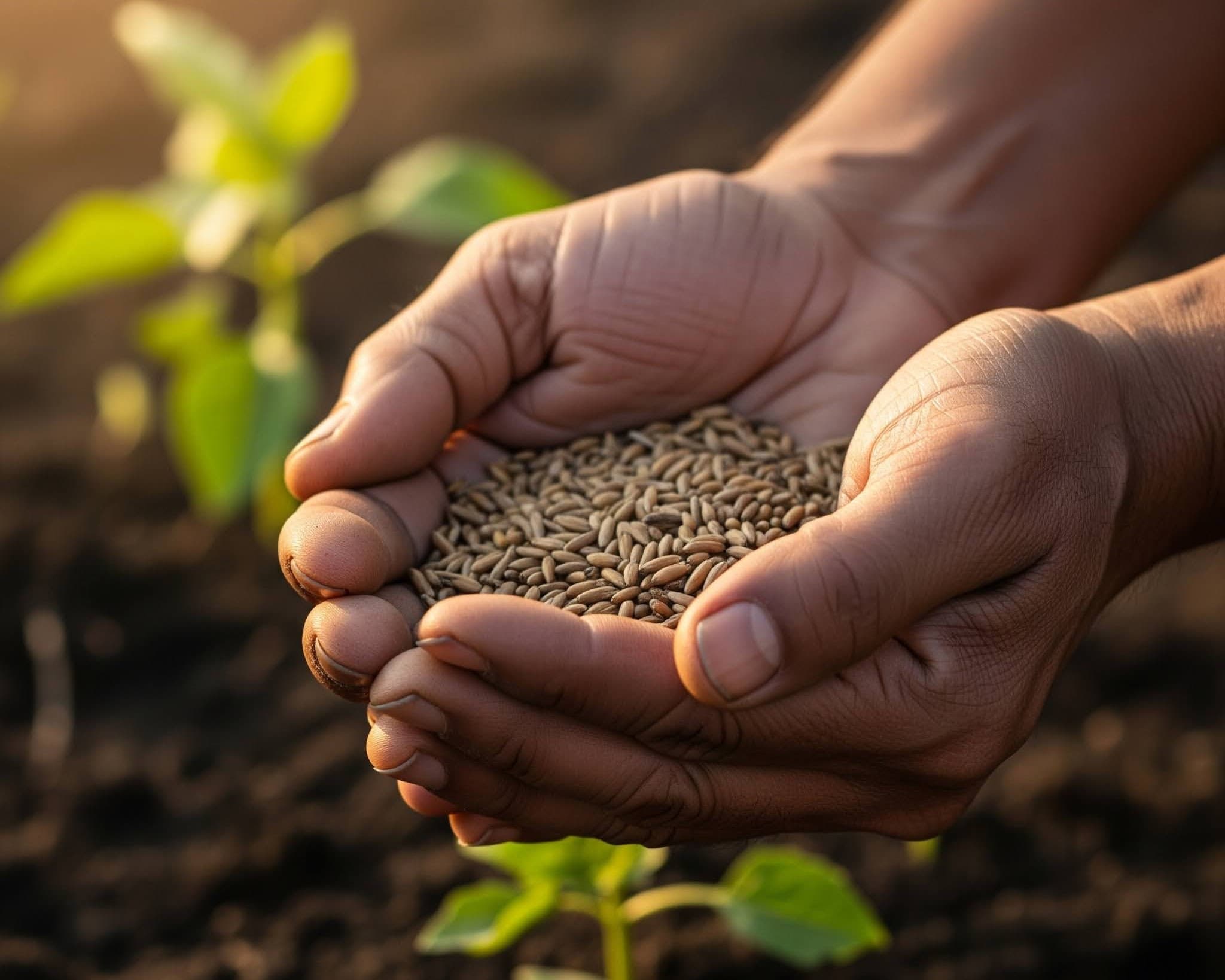
Education gets the next generation out of daily-wage work. For the families still on the land, a good season or a bad one still decides the year. That is why, alongside scholarships, we run a campaign for drought-resistant seed kits and basic agricultural training for small farmers.
Or read more about where our scholars are now.