India's poverty story has two halves. One is a genuine success: hundreds of millions of people have climbed out of extreme poverty in little more than a decade. The other is the people that progress hasn't reached yet, and on a population of 1.4 billion, "yet" still means tens of millions of families.
Here's what the numbers actually say, where they come from, and what helping looks like on the ground.
How many people live in poverty in India?
It depends on how you measure it, and the two most-cited measures tell a consistent story.
Income poverty (World Bank). The World Bank's international extreme poverty line is $3 a day per person, adjusted for local prices. By that measure, India's extreme poverty rate fell from 27.1% in 2011-12 to 5.3% in 2022-23: from roughly 340 million people to about 75 million.
Multidimensional poverty (NITI Aayog). India's own index looks beyond income at 12 indicators across health, education, and living standards, including nutrition, school attendance, cooking fuel, sanitation, drinking water, electricity, and housing. On that measure, poverty fell from 29.17% in 2013-14 to 11.28% in 2022-23, and the government estimates that 248 million people moved out of multidimensional poverty over those nine years.
Economists still debate the details of both measures, and at the higher poverty lines the World Bank uses for lower-middle-income countries, the share of people counted as poor is considerably larger. But every serious measure agrees on the direction: fewer people are in poverty than a decade ago, and a large number still are.
Who is still being left behind?
Averages hide the families we meet. In our work across Tamil Nadu and other parts of India, the same situations come up again and again:
- Students who earn a place in college and then cannot pay the fees, so they take factory or daily-wage work instead.
- Girls who miss school every month because their families cannot afford sanitary supplies.
- Elderly people in under-resourced care homes that run short of basic medicines and supplies.
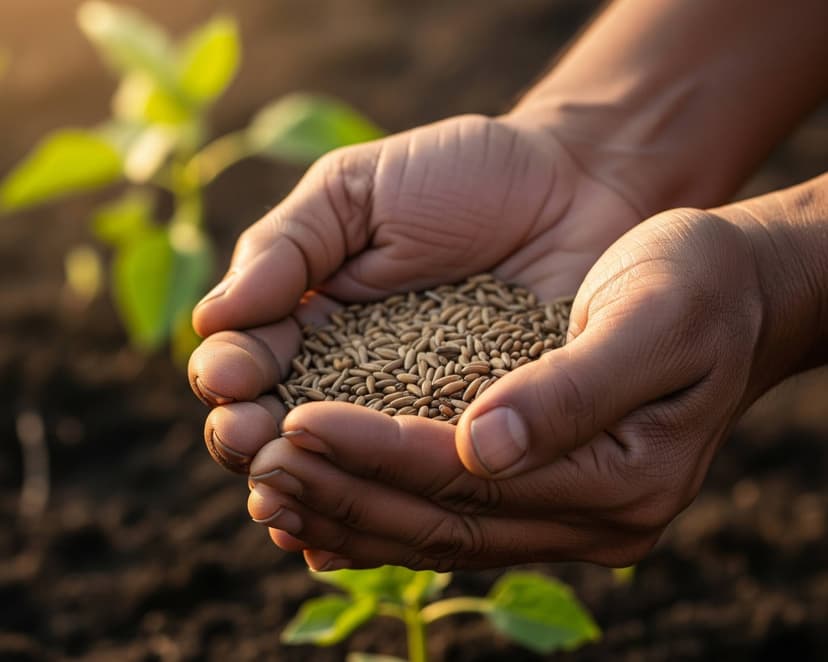
- Small farmers one bad season away from debt, without the seeds or training to recover.
- Families who lose a working parent to illness and have no safety net.
None of these are hopeless problems. Most come down to a specific, solvable cost: a semester's fees, a year of sanitary pads, a box of medical supplies, a seed kit.
What actually helps?
Large-scale poverty reduction in India has come from economic growth and public programs, and nothing a small charity does replaces that. What direct giving can do is close specific gaps for specific families, quickly, and in a way you can verify.
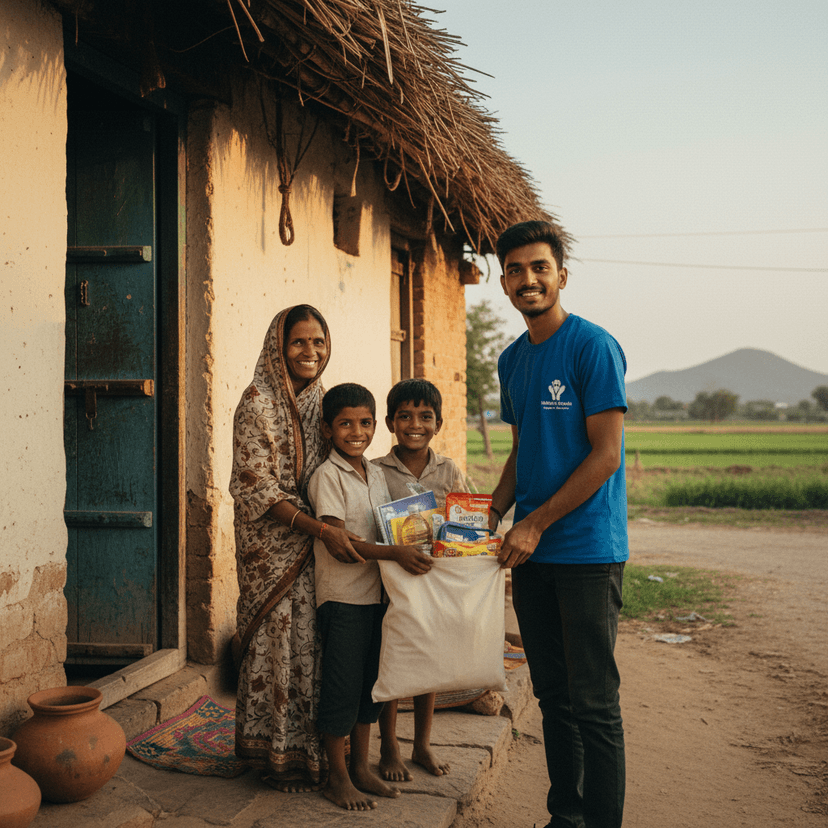
That is the model OneFamilee is built on. We are an all-volunteer 501(c)(3). Volunteers in India verify every family in person, buy exactly what is needed, and send receipts and photo updates back to donors. Nobody is paid, so the money you give goes to the family, minus only the card processing fee.
If you want to see what that looks like for one family, read where a single $50 donation goes.
How to help families in India from the U.S.
- Give through a U.S. 501(c)(3). Donations to OneFamilee are tax-deductible for U.S. taxpayers.
- Pick a specific need. Choose a campaign (education, girls' health, elder care, or farming) so you know where your money goes.
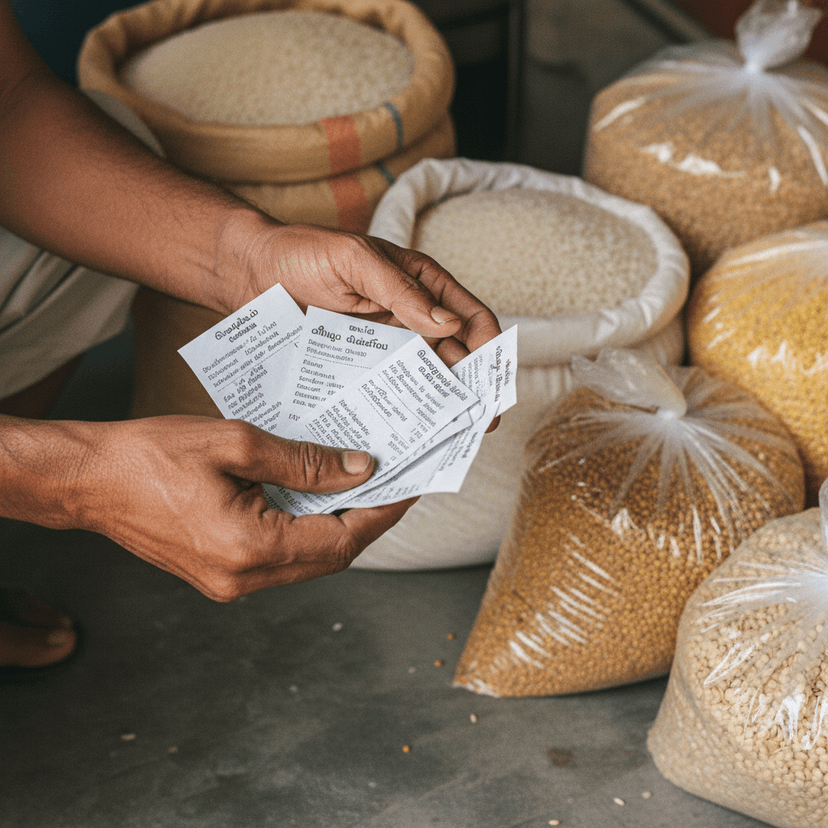
- Ask for proof. Any charity working in India should be able to show you receipts and updates. We send them every month.
- Give monthly if you can. Most of these needs recur: school fees, groceries, sanitary supplies. Steady support lets families plan.
Sources
- World Bank, Poverty and Equity Brief: India (June 2025): extreme poverty at the $3/day (2021 PPP) line, 2011-12 and 2022-23.
- NITI Aayog, Multidimensional Poverty in India since 2005-06 (January 2024): national MPI headcount 2013-14 to 2022-23.